Good morning my dear readers.
It’s been a hot minute since I last rambled on here on my blog. I suppose it’s a mash-up of insecurity, life, focus, etc. But who’s blaming here?
Today I’m taking a ‘mental health’ day. It’s more a ‘physical health’ day. Or maybe just a day where the moments present themselves where I have to lie down.
I’m an overexplainer, so I’ll leave it there and time myself to see how long I can resist explaining myself. Perhaps today the post will go out with minimal overexplaining.
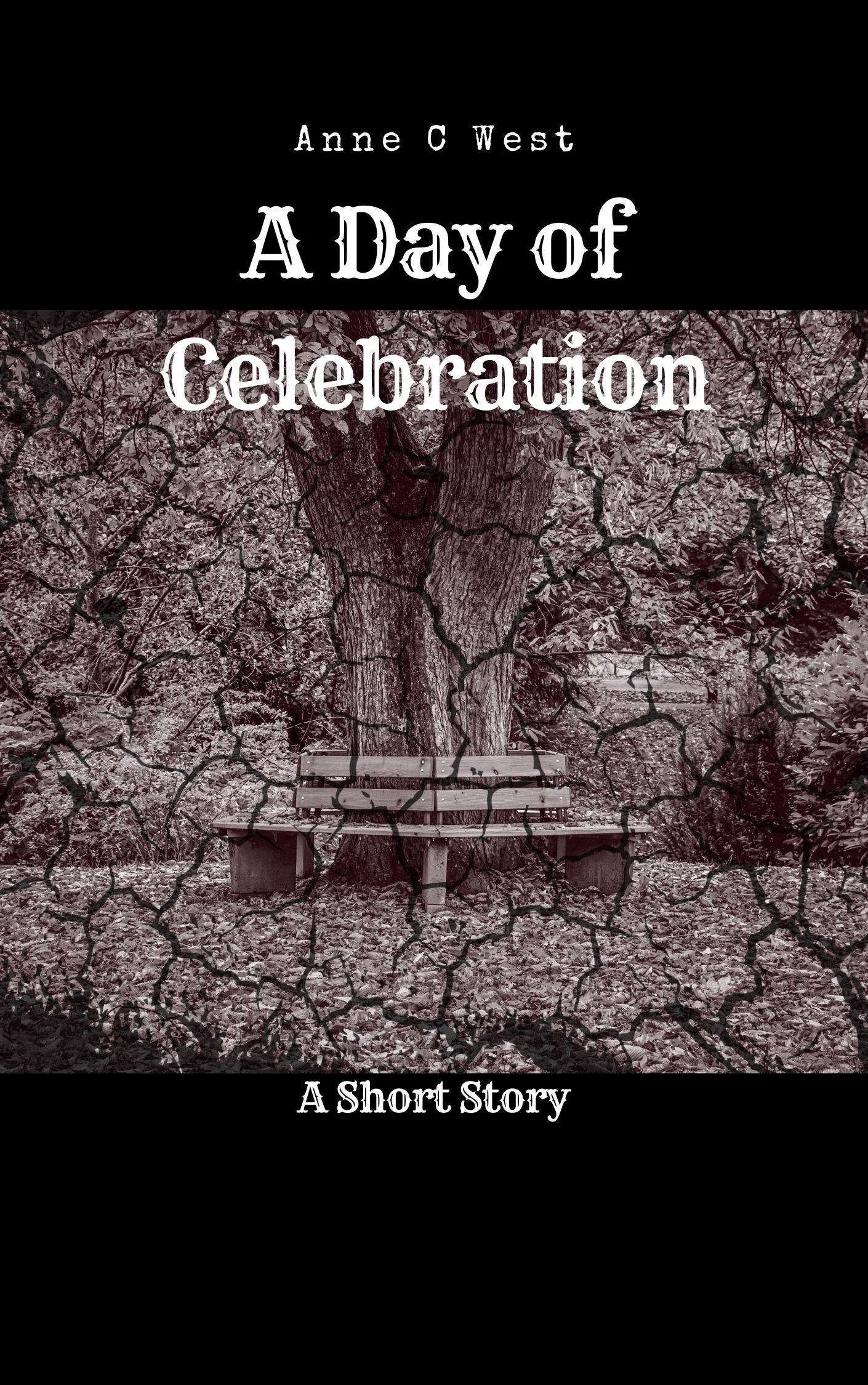
Silver Murder, my 1940s cosy mystery set in Kensington, Johannesburg, is finally out there to read!
Pick it up from HERE, where you can choose your preferred platform of poison
Back to the odd relationship with death.
I have a sister-in-law who abandoned her mother on her deathbed because, in her words, ‘it’s not her faith’.
Now the levels of emotions I have recalling that particular moment in time are yet uncharted.
First of all, to each his own. Whatever floats your boat, go for it. Don’t expect me to fall in. And also don’t convert others to your side.
But for me, as humans, we should first DO NO HARM. I am by no means a pacifist. Let’s just get that straight. But when we are in a position to do no harm, we have the responsibility to choose that path. Until the opportunity presents itself where you’re standing in front of a person whose sole purpose is to DO harm. Then, go for it. Get in there with hands and feet because we are by no means supposed to just take one for the team or take it on the cheek or whatever beautiful saying is used to promote complacency.
Back to the situation with my mother-in-law.
She took many months to die. And her suffering was great. It was a terrible time for me. But one thing that mattered so much to Mom was her children and grandchildren. Talk about a woman whose heart was just so big and roomy and always having a place for somebody more!
In that time, hubby was working abroad, and we saw him every few months only. I drove down every month, like it was our habit, to get to both mine and hubby’s parents. I visited her every time we were down there, and then she would ask me, ‘When is *Suzie coming?’ or ‘Why is *Suzie not coming?’
*Suzie is the generic name I always use to protect myself from legal action. Not the real name*
Firstly, my heart broke every time. There’s a pandemic in this world of elderly abandonment. Not to mention abuse and neglect. But to see it happen to somebody you love and that by her own blood, broke my heart.
I would dance around the reply. ‘She’s busy, Grandma’, or ‘Things are a bit rough with her new husband’, or after a while I just ignored the question. Pretended I didn’t hear her.
Yeah, really spineless of me. But I could not tell her, ‘Grandma, *Suzie* believes you are dying, and it’s against her faith to face death. Jesus said, ‘ Let the dead bury their dead,’ and *Suzie is leaving your death and dying to us.’
That felt like doing harm to me. A woman who is still alive and, in fact, has 100% the ability to recover and heal and live for another 30 years doesn’t need to hear that. It would kill her faster.
And by the way, I do believe that each and every disease can be reversed 100%. Some call it miracles. Some call it biology. Call it whatever you want; the body has the ability to heal. I’ve believed that all my life. But just can’t figure out why it doesn’t happen more often. That’s my journey in life.
Anyways, now onto another little tale about people’s weird relationship with death.
My mother is in an old-age home.
As good, but complicated, a relationship I had with my mother-in-law, as bad and complicated a relationship I have with my own mother.
Unfortunately, in the season of life she is in at 80, death is everywhere. It’s in her friendship circle, her family, other residents and by the stroke of life, the matron at the old-age home! What are the odds?
Death doesn’t discriminate, that’s for sure.
Anyways, this woman with a heart of gold and a refusal to complain even through her cancer treatment died ‘suddenly’ the other week. She’s one of quite a few people who are at least twenty years younger than the youngest resident there, who died this year alone.
The reaction of the residents was one of shock, obviously. But they also had an odd sensationalism about this particular death. It’s almost as if it’s a search for the sins she committed or the harm others did to her that caused her death. Not once did anybody just see it as the natural part of life.
It’s the one prophecy that everybody faces eventually. And I would have thought that the elderly would understand this better than the rest of us who are still in the trenches living life, raising kids, building careers, striving for self-actualisation and generally finding life to live.
Agnes, the main character and my sleuth in Silver Murder and the rest of the forthcoming Kensington Murder Mysteries, is working as an undertaker. She’s taking her father, Irving Pinkerton’s business, called Pinkertons Undertakers, over. It’s scandalous and terrible and not something accepted, especially for women in the 1940s. I think that is a universal theme of that time.
She’s based on the life I grew up in. No, I do not run a business like that. But my father was an undertaker. As was his father at some point in his life. So death was something I grew up with. Growing up between death and death-adjacent things, developed a somewhat macabre sense of humour in me. Maybe a bit of a blaze approach to things. But it’s given me a front row seat to how we relate to death as humans.
I can write a book about the jokes I’ve heard about death or coffins or wreaths or mourning, etc. Books maybe plural. And how many times my dad’s vocation was the butt of a joke. I learned to joke with or even tell the jokes. If you can’t beat them, join them, right?
It’s not the fearsome event in life. It’s very much just another event on another Wednesday, happening to just another *Suzie.
I read ‘Women Who Run With Wolves‘ a good few years ago. In this book, the author highlights how integral women, specifically, are to the circle of life. It’s always stayed with me. Yes, we give birth, and sometimes death touches that event too. But as a rule, women were the ones next to the deathbed through the ages. In the times when vocations for women were frowned upon, women were allowed to be nurses or teachers. And even if women raised children, they cared for the sickly or caught the babies or supported the elderly, etc. etc.
Life and death were part of normal life.
I think the experience of life includes death. It’s something not to shy away from. It’s not a life-altering event. It’s a time to be experienced.
Now I’m also going to mention the alterations that do happen because of death. I’m not ignorant of those alterations. Some I’ve experienced and some I’ve witnessed.
In many situations, financial struggles ensue because of death. I’m in a situation like that now where the death of my father a few years ago caused serious financial pressure on our household. We have to care now for my elderly mother and my two disabled brothers.
A friend of mine lost her husband in a Zama-Zama attack years ago, and she was left to raise their six children alone with the income from her hair salon and the little insurance her husband could afford as a miner.
Our own financial situation was shaken by the many, many near-death illnesses that have wracked my family over the past 25 years of married life. So yes, death and near-death events cause a lot of trouble.
But the experiences around death allow us the opportunity to learn and grow and experience life. We engage and live this life which we are afforded every day. In the discomfort of it all, it is just another experience. It’s the experience of sadness and mourning. It’s the experience of coming together with those who matter to you, or don’t matter to you. It’s the opportunity to be still. Still with your own human experience.
But it’s not an opportunity to do harm and exploit and abandon. Time with those we can see are in the last stretches of their lives gives us the opportunity to draw nearer. It’s not the opportunity to put that last knife in their backs.
My dad died suddenly. My mother-in-law did not.
I had the opportunity to put the complicated aspect of our relationship aside and just be with her. Little as it was.
But my father’s death happened so unexpectedly and so out of the blue; there are many things I would have wanted to resolve. My father died a lonely man, and he probably felt abandoned by me. We had a few fights in the months before he died about the help I offered and he refused to take. And he’s said some really cruel things about me, which I recognise now were due to my hotheaded reaction to his rejection of the help we offered. He believed he carried the burden of the care for my disabled brothers and mother alone. But he was a proud man who believed he should have this and should have that and that he inevitably failed.
Pride is a terrible thing.
But death was just a turning point. For me, after my father’s death. And for the relationship between my sister-in-law and me. Both experiences made me a better person. It gave me a greater experience of life. It’s not easy and not something I enjoy, but the sun came up every morning after those days. It’s gone down after every person who died too young or old person who suffered toward death. I didn’t lift a finger to get the sun in the sky every morning after a sudden death. And I also didn’t force it down after every expected death.
And that is probably the best thing I’ve realised. Death doesn’t end things for us witnessing death. It leaves us with memories, experiences, revelations, opportunities and other experiences. It enriches life. It gives us the whole experience of life.
It rounds out our human experience here on the blue planet, 3rd rock from the sun.
Cheers! Until next time.